
Have you ever received a message that simply said “YWA” and wondered if the sender was joking, being sarcastic, or trying to make a point? You’re not alone. Modern digital communication is packed with abbreviations, acronyms, and internet slang that can leave people scratching their heads.
If you’ve searched for ywa meaning in text, what does ywa mean in text, or even what does ywa mean in a text, you’ve come to the right place. While some texting abbreviations such as LOL, BRB, and OMG are widely recognized, YWA remains one of those confusing expressions that many people encounter without fully understanding.
The truth is pretty simple. YWA stands for “You’re Welcome Anyway.” However, the real meaning often depends on context, tone, and the relationship between the people involved. In some situations it sounds funny and playful. In others, it can feel slightly passive-aggressive or sarcastic.
Understanding the ywa meaning can help you avoid awkward misunderstandings, recognize hidden emotions in messages, and communicate more effectively across texting apps, social media platforms, and online conversations.
What Does YWA Mean in Text?
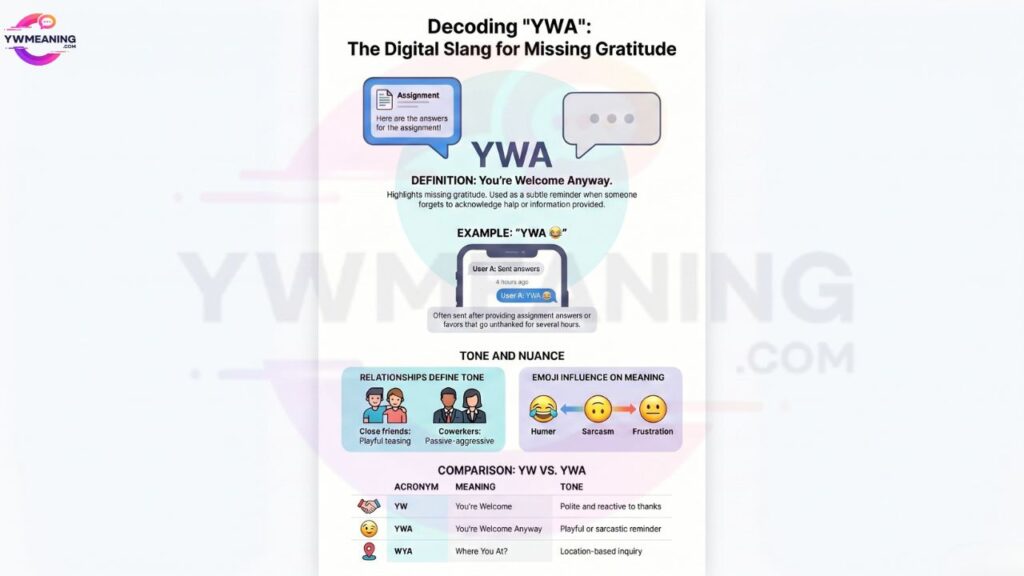
YWA means “You’re Welcome Anyway.”
People typically use it after helping someone when they don’t receive a thank you or acknowledgment. Instead of directly pointing out the missing gratitude, they use YWA as a subtle reminder.
The relationship is simple:
- YWA → stands for → You’re Welcome Anyway
- YWA → is used when → someone forgets to say thank you
- YWA → conveys → humor, sarcasm, or acknowledgment
- YWA → appears on → texting apps and social media platforms
For example:
Example 1
Friend: “Can you send me the assignment answers?”
You: “Sure.”
Several hours later with no response
You: “YWA 😄”
Example 2
You: “I reserved your seat for the concert.”
Friend: “Cool.”
You: “YWA 😂”
In both cases, the sender is pointing out that their effort went unrecognized.
YWA Meaning in Chat and Online Messaging
The ywa meaning in chat remains the same across most messaging platforms. Whether you’re texting, using group chats, or sending direct messages, YWA generally means “You’re Welcome Anyway.”
What changes is the tone.
In a close friendship, YWA often feels playful and harmless. Between coworkers or people who don’t know each other well, the same message might appear sarcastic.
This is one reason why online messaging requires more than simply understanding words. You also need to understand emotional context.
Many internet users rely on:
- Emojis
- GIFs
- Reaction images
- Punctuation
- Capitalization
These extra signals help clarify the intended meaning behind abbreviations like YWA.
YWA Meaning in Snap
Many people specifically search for ywa meaning in snap because Snapchat conversations tend to move very quickly.
On Snapchat, YWA is often used:
- Between close friends
- In streak conversations
- After sharing information
- When helping someone
- During playful teasing
Example:
Friend: “What’s the answer to question 5?”
You: “It’s B.”
Friend: “Got it.”
You: “YWA 😂”
Because Snapchat culture is generally casual, YWA is commonly interpreted as humorous rather than rude. Still, context matters a lot.
What Does YWA Mean From a Girl?
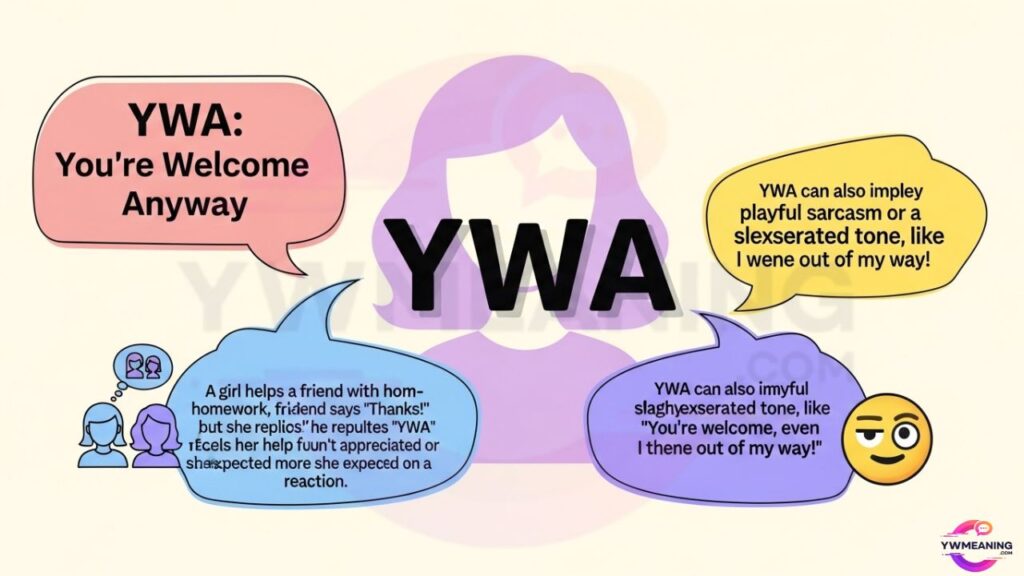
If you’re wondering what does ywa mean from a girl, the answer depends on her personality and the situation.
Most of the time, a girl using YWA is simply:
- Being playful
- Pointing out forgotten gratitude
- Teasing a friend
- Making a joke
Example:
Girl: “I reminded you about your interview.”
You: “It went great!”
Girl: “YWA 😆”
In this case, she’s jokingly reminding you that she helped.
However, if the conversation already contains tension, YWA may indicate mild frustration because her effort wasn’t acknowledged.
The key isn’t the gender of the sender. The key is the emotional context of the conversation.
YWA Meaning in Text From a Guy
The ywa meaning in text from a guy generally follows the same pattern.
When a guy sends YWA, he may be:
- Joking with friends
- Looking for recognition
- Being sarcastic
- Highlighting that he helped
For example:
Guy: “I fixed your laptop issue.”
You: “It’s working now.”
Guy: “YWA 😅”
This doesn’t necessarily mean he’s upset. Often, it’s simply friendly banter.
The tone can range from lighthearted humor to mild annoyance depending on the relationship.
The Origin of YWA in Internet Slang
Unlike traditional dictionary words, YWA emerged naturally through internet slang and SMS culture.
During the early days of texting, people looked for faster ways to communicate because messages had strict character limits. As a result, abbreviations became extremely popular.
Common examples included:
- LOL (Laugh Out Loud)
- BRB (Be Right Back)
- OMG (Oh My God)
- TY (Thank You)
- YW (You’re Welcome)
Eventually, users created more nuanced abbreviations that expressed emotions and attitudes.
YWA evolved as a shorthand version of saying:
“You’re welcome… even though you didn’t thank me.”
Over time, it spread across messaging platforms, social media apps, and casual online conversations.
Why YWA Exists in Modern Digital Communication
At first glance, YWA seems unnecessary. After all, why not just say “You’re welcome”?
The answer lies in human psychology.
People appreciate acknowledgment.
When someone provides help, advice, information, or support, they naturally expect some level of recognition. YWA allows people to express that expectation without starting a confrontation.
In many ways, YWA reflects modern social behavior.
It communicates:
- I noticed I wasn’t thanked.
- I helped you.
- Recognition matters.
- I’m mentioning it in a lighthearted way.
This emotional layer makes YWA more interesting than many other texting acronyms.
YW Meaning in Text vs YWA Meaning in Text
Many people confuse yw meaning in text with YWA.
Although they look similar, they serve different purposes.
| Acronym | Meaning | Typical Usage | Tone |
|---|---|---|---|
| YW | You’re Welcome | Response after receiving thanks | Polite |
| YWA | You’re Welcome Anyway | Response when thanks wasn’t given | Playful or sarcastic |
| TY | Thank You | Expressing gratitude | Appreciative |
| NP | No Problem | Casual acknowledgment | Relaxed |
The difference may seem small, but the emotional message changes significantly.
YW responds to gratitude.
YWA highlights the absence of gratitude.
Common Situations Where People Use YWA
You’ll frequently encounter YWA in these situations:
1. After Sharing Information
Someone asks for help.
You provide the answer.
They move on without thanking you.
YWA becomes the response.
2. Between Friends
Friends constantly tease each other.
YWA often functions as playful humor rather than criticism.
3. Family Group Chats
Siblings are famous for forgetting thank-yous.
A quick YWA helps keep interactions light.
4. Social Media Conversations
People use YWA in comments, direct messages, and private chats when their contribution goes unnoticed.
5. Group Projects
When someone contributes significantly but receives no acknowledgment, YWA may appear as a subtle reminder.
How Emojis Change the Meaning of YWA
One major gap many explanations ignore is emoji influence.
The same abbreviation can communicate different emotions depending on the emoji attached.
| Example | Interpretation |
|---|---|
| YWA 😂 | Funny and playful |
| YWA 😄 | Friendly reminder |
| YWA 😅 | Light teasing |
| YWA 🙃 | Slight sarcasm |
| YWA 😐 | Mild frustration |
This demonstrates why understanding message tone is just as important as understanding the words themselves.
What Does YMA Mean in Texting?
Some users accidentally search for what does yma mean in texting when they actually mean YWA.
YMA is not a widely recognized texting abbreviation like YWA.
In many cases, it’s simply a typo or platform-specific shorthand. If you encounter YMA, the meaning usually depends on the conversation rather than a universal definition.
Always consider context before assuming its meaning.
WYA Meaning vs YWA Meaning
Another common confusion involves wya meaning.
These abbreviations look very similar but mean completely different things.
WYA stands for:
“Where You At?”
People use it when asking someone’s location or availability.
Example:
“Hey, WYA?”
Meanwhile, YWA means:
“You’re Welcome Anyway.”
Mixing them up can completely change the meaning of a conversation.
Platform-Specific Usage of YWA
One area that many articles overlook is how YWA behaves differently across various platforms. While the basic meaning stays the same, the culture of each platform affects how people interpret it.
YWA on WhatsApp
WhatsApp conversations often involve family members, close friends, classmates, and coworkers. Because relationships are usually more personal, YWA tends to feel friendly and playful.
Example:
You: “I sent the notes yesterday.”
Friend: “Thanks, just saw them.”
You: “YWA 😄”
The message comes across as light teasing rather than criticism.
YWA on Snapchat
Snapchat users frequently exchange short messages and streaks. Since conversations move quickly, forgotten thank-yous happen often.
As a result, YWA is commonly used as a joke among friends.
YWA on Instagram DMs
Instagram conversations often include reactions to stories, posts, and recommendations.
If someone recommends a product, restaurant, movie, or song and receives no acknowledgment, they might reply with YWA later.
YWA on Twitter/X
On Twitter/X, YWA appears less frequently than on private messaging apps. When used publicly, it often carries a stronger sarcastic tone because the audience is larger.
Is YWA Rude, Funny, or Passive-Aggressive?
The honest answer is all three are possible.
The meaning depends heavily on context.
A lot of people automatically assume YWA is rude. That’s not always true. In fact, most uses are intended as humor.
Think about these examples:
Funny:
“Spent twenty minutes helping you fix your Wi-Fi. YWA 😂”
Playful:
“Recommended that show before it became popular. YWA 😎”
Passive-Aggressive:
“Finished your portion of the project too. YWA.”
Notice how punctuation, emojis, and previous conversation history change the emotional impact.
This is why understanding texting etiquette matters in modern communication.
How to Respond to YWA
Many people understand what YWA means but aren’t sure how to reply.
Fortunately, there are several easy options.
Friendly Responses
If someone helped you and you genuinely forgot to thank them, try:
- “Oops, thank you!”
- “Sorry, I forgot to say thanks.”
- “You’re right, appreciate it!”
- “My bad. Thanks again.”
These responses acknowledge the person’s effort and keep the conversation positive.
Funny Responses
If the conversation is playful, you can match the humor.
Examples:
- “Award accepted.”
- “You’re welcome accepted anyway.”
- “I knew you’d remind me.”
- “Thanks, hero.”
Humorous replies often strengthen friendships because they continue the joke.
Professional Responses
In workplace conversations, avoid sarcasm.
A better response would be:
- “Thank you for your help.”
- “I appreciate your support.”
- “Thanks for taking the time to assist.”
Professional communication works best when gratitude is direct and clear.
Why Gratitude Matters in Digital Communication
The popularity of YWA reveals something important about human behavior.
People like being appreciated.
Whether someone spends five minutes helping or several hours solving a problem, acknowledgment creates positive social connections.
Research in communication psychology consistently shows that recognition improves relationships and encourages future cooperation.
That’s why YWA exists.
It’s not really about the abbreviation itself.
It’s about reminding people that appreciation matters.
In many cases, a simple “thank you” prevents misunderstandings entirely.
Related Texting Acronyms You Should Know
To fully understand YWA, it helps to understand related text abbreviations and chat acronyms.
YW
YW means “You’re Welcome.”
Unlike YWA, it is used after someone says thank you.
Example:
Friend: “Thanks for helping.”
You: “YW!”
TY
TY means “Thank You.”
It’s one of the most common expressions of gratitude in online messaging.
TYSM
TYSM means “Thank You So Much.”
This version expresses stronger appreciation.
NP
NP means “No Problem.”
Many people use it instead of “You’re Welcome.”
LOL
LOL means “Laugh Out Loud.”
People often attach LOL to YWA to reduce any appearance of sarcasm.
Example:
“YWA lol”
BRB
BRB means “Be Right Back.”
Like YWA, it’s part of the broader ecosystem of internet slang.
SMH
SMH means “Shaking My Head.”
It usually expresses disappointment or disbelief.
IDC
IDC means “I Don’t Care.”
This abbreviation often appears in casual conversations among younger users.
IMO
IMO means “In My Opinion.”
It’s commonly used when sharing personal viewpoints.
IYKYK
IYKYK means “If You Know, You Know.”
People use it when referencing inside jokes or shared experiences.
Understanding these terms helps you navigate modern digital language more confidently.
Generational Differences in YWA Usage
Different generations use texting abbreviations differently.
Gen Z
Gen Z users are highly comfortable with internet slang.
For them, YWA is often humorous and playful.
They frequently combine it with memes, emojis, and reaction GIFs.
Millennials
Millennials understand YWA but may use it less frequently.
Many millennials prefer complete sentences while still appreciating internet shorthand.
Older Adults
Older users may be unfamiliar with YWA entirely.
This explains why searches for “what does ywa mean” continue to grow.
The abbreviation isn’t universally recognized like LOL or OMG.
Signs That Someone Is Serious When Using YWA
Most uses of YWA are harmless.
Still, there are situations where the sender may genuinely feel annoyed.
Watch for these clues:
- No emojis included
- Short responses throughout the conversation
- Existing tension before YWA appeared
- Repeated reminders about appreciation
- Formal language combined with YWA
When these signs appear together, YWA may indicate actual frustration rather than humor.
Common Misunderstandings About YWA
Several myths continue circulating online.
Myth 1: YWA Always Means Anger
False.
Most examples are playful rather than angry.
Myth 2: YWA Means “You’re Welcome Always”
False.
The accepted meaning is “You’re Welcome Anyway.”
Myth 3: Only Teenagers Use YWA
False.
Adults use it regularly in casual conversations.
Myth 4: YWA Is Professional
False.
YWA belongs to informal communication.
Avoid using it in business emails or formal documents.
Myth 5: Every YWA Is Sarcastic
False.
Tone varies based on context, relationship, and delivery.
Real-Life Examples of YWA in Text Conversations
Here are some realistic examples showing how YWA appears in everyday life.
Friend:
“What’s the password for the Wi-Fi?”
You:
“It’s written on the router.”
Friend:
“Found it.”
You:
“YWA 😂”
Sibling:
“Did mom call?”
You:
“Yes, twice.”
Sibling:
“Okay.”
You:
“YWA 😄”
Coworker:
“Could you send me that report?”
You:
“Already emailed it.”
Coworker:
“Got it.”
You:
“YWA.”
Notice how the final example sounds more serious due to the lack of emojis.
Why Understanding YWA Meaning in Text Matters
Some people dismiss abbreviations as unimportant.
That’s a mistake.
Today’s relationships often rely heavily on texting, messaging apps, and social media communication.
Small phrases carry surprisingly large emotional meaning.
Understanding what does ywa mean in text helps you:
- Interpret conversations accurately
- Avoid unnecessary misunderstandings
- Recognize sarcasm and humor
- Improve texting etiquette
- Strengthen digital relationships
- Stay current with internet culture
Language constantly evolves.
New abbreviations appear every year, while older expressions fade away. Staying informed helps you communicate naturally and confidently in modern online environments.
Final Thoughts
The ywa meaning in text is straightforward: “You’re Welcome Anyway.” Yet the phrase carries more emotional depth than many people realize.
At its core, YWA reminds someone that help, advice, or support was provided without receiving acknowledgment. Sometimes it’s playful. Sometimes it’s sarcastic. Occasionally it’s a subtle expression of frustration.
Understanding what does ywa mean, what does ywa mean in a text, ywa meaning in chat, ywa meaning in snap, and related expressions like yw meaning in text and wya meaning allows you to navigate digital communication with greater confidence.
The next time someone sends YWA, you’ll know exactly what they’re saying—and perhaps remember to send a quick thank-you before they have the chance.
Frequently Asked Questions
What does YWA mean in text?
YWA stands for “You’re Welcome Anyway.” People typically use it after helping someone who forgot to say thank you. It can be playful, humorous, or mildly sarcastic depending on the context, relationship, and overall tone of the conversation.
What does YWA mean from a girl?
When a girl sends YWA, she is usually jokingly pointing out that she helped or did something useful without receiving acknowledgment. Most of the time it is playful rather than negative, though context always determines the exact tone.
Is YWA rude or sarcastic?
YWA is not automatically rude. In many conversations it is used as friendly teasing between friends or family members. However, if there is existing tension or no humorous context, it can come across as mildly passive-aggressive.
What is the difference between YW and YWA?
YW means “You’re Welcome” and is used after someone says thank you. YWA means “You’re Welcome Anyway” and is typically used when someone forgot to express gratitude. The difference is subtle but changes the emotional message significantly.